You walk outside after a storm and find a tree lying across your yard. Thankfully, it didn’t hit your house, damage your fence, or land on your car. So, is it really necessary to have it removed?
In many cases, yes. Even when a fallen tree hasn’t damaged anything, it can still create safety concerns, damage your property, and make your yard difficult to use. The important thing is to understand why the tree fell, whether anything around it is still unstable, and what needs to be done to safely clear the area.
Not every fallen tree requires an emergency removal, but it’s worth having the situation evaluated before deciding to leave it where it is.
Is a Fallen Tree Dangerous If It Didn’t Hit Anything?
It can be. A tree lying on the ground may look harmless, but fallen trees can be unpredictable.
Branches may still be attached and under tension. The trunk may shift or roll, especially on sloped or uneven ground. Large limbs can also be difficult to move without the proper equipment.
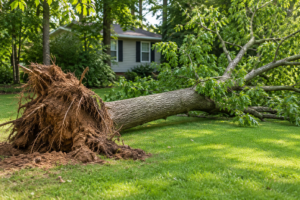
There may also be damage you can’t see. If the tree was pulled out of the ground, its root system may have disturbed the surrounding soil. If the trunk snapped instead of the tree falling over completely, the remaining portion may be weakened and could pose another hazard.
For these reasons, it’s best to keep children, pets, and anyone else away from the tree until it has been evaluated.
Never try to cut up or move a large fallen tree yourself. Cutting a tree that’s under pressure can cause branches or sections of the trunk to shift unexpectedly. What looks like a simple cleanup job can quickly become dangerous.
What Should You Do After a Tree Falls in Your Yard?
Before worrying about cleanup, take a few precautions.
1. Keep your distance.
Stay away from the fallen tree, especially if large branches are broken, the trunk is split, or the root system has been pulled out of the ground. Don’t climb on it or try to move heavy sections.
2. Check for power lines.
If the tree or any branches are touching or near electrical wires, stay far away. Never touch the tree, branches, or anything in contact with the wires. Contact your utility company or emergency services as appropriate.
3. Look for additional damage.
From a safe distance, check whether the tree damaged a fence, landscaping, driveway, nearby structures, or other trees. Also look for broken branches that may still be hanging overhead.
4. Take pictures.
Photograph the fallen tree and any visible damage before cleanup begins. If you plan to file an insurance claim, these pictures may be helpful. Contact your insurance company to discuss your coverage and next steps.
5. Call a professional tree service.
A professional can evaluate the situation, determine how the tree should be removed, and safely handle the cleanup.
Does a Fallen Tree Always Need to Be Removed?
Not necessarily. The right decision depends on the tree’s location, condition, size, and what caused it to fall.
For example, a small tree that falls in an unused wooded area may not require immediate removal if it isn’t creating a hazard or interfering with anything. Some homeowners even choose to leave certain fallen trees in natural areas because decaying wood can provide habitat for wildlife.
However, a fallen tree in an active yard is a different situation.
Removal is usually worth considering if:
- The tree is blocking your driveway, walkway, or access to part of your property.
- Large branches are scattered across the lawn or landscaping.
- The trunk is close to your house, garage, fence, or another structure.
- The tree has damaged underground features or disturbed the surrounding ground.
- The remaining trunk or branches are unstable.
- The tree is in an area where children, pets, or visitors regularly play.
Even if the tree isn’t an immediate threat, removing it can help prevent additional problems and restore the use of your yard.
What If the Tree Fell Over but the Roots Are Still Attached?
Sometimes a tree doesn’t completely separate from the ground. Instead, it tips over, leaving a large portion of its root system exposed while the trunk remains partially attached.
This is often called an uprooted or windthrown tree.
These situations deserve special attention because the tree may still be under significant tension. The root plate can shift, the trunk can move, and the remaining roots may not provide enough support to keep the tree stable.
A tree that has partially uprooted should not be pulled upright or cut apart without a proper assessment. Depending on the amount of root damage and the tree’s condition, removal may be the safest option.
It’s also important to look at the surrounding trees. When one tree comes down, it may have disturbed the roots of nearby trees or exposed weaknesses that weren’t previously visible.
Can You Leave a Fallen Tree in Your Yard?
In some situations, yes. But there are a few things to consider.
A fallen tree can take up a surprising amount of space, especially if it’s a mature oak or pine. Over time, the wood will begin to decay, and the area underneath may become difficult to maintain.
Large branches can also create obstacles for mowing, landscaping, and everyday yard use. If the tree is near your home or another structure, leaving it in place may not be a practical option.
If you want to keep some of the wood, ask your tree service about leaving logs behind for firewood. Depending on the job, wood chips may also be available for mulch or pathways.
The goal doesn’t always have to be hauling away every piece of wood. It should be making the property safe and leaving the area in a condition that works for you.
How Much Does It Cost to Remove a Fallen Tree?
The cost of fallen tree removal depends on several factors. A small tree lying in an open area is generally much easier to handle than a large oak with heavy limbs tangled in other trees.
Some of the biggest factors include:
- Tree size: Larger trunks and heavier branches require more time, labor, and equipment.
- Location: A tree in an open yard is usually easier to remove than one in a tight space between structures or landscaping.
- Condition: Broken, twisted, or partially uprooted trees may require additional planning and careful cutting.
- Access: Limited access for trucks and equipment can make the job more complicated.
- Cleanup: Hauling away branches, logs, and other debris adds to the scope of the work.
- Specialized equipment: Some situations require boom trucks, bucket trucks, or other equipment to safely handle large sections of the tree.
The best way to determine the cost is to have a professional look at the tree and provide an estimate based on the work involved.
Why Hire a Professional Tree Service for Storm Cleanup?
Removing a fallen tree isn’t just a matter of cutting it into smaller pieces. Large trees can weigh thousands of pounds, and damaged limbs and trunks may shift unexpectedly as they are cut.
A professional tree service has the equipment and experience to plan the removal, manage heavy sections of wood, and clear the area safely.
North Raleigh Tree Service handles fallen tree removal and storm recovery throughout the Raleigh area. Our team owns its equipment, including boom and bucket trucks, allowing us to handle a variety of tree removal and cleanup projects.
We also understand that the job isn’t finished when the tree is off the ground. Branches, logs, and wood chips can leave quite a mess. Our cleanup services help get your yard back in shape.
If you’d like to keep some of the wood for firewood or use wood chips for mulch, let us know. We can discuss the options for your project.
Frequently Asked Questions About Fallen Tree Removal
Do I need to remove a tree that fell in my backyard?
Not always. If the tree is in an unused wooded area and doesn’t pose a safety concern, you may be able to leave it. However, trees in active yard spaces, near structures, or in areas where people walk and play should be evaluated and often removed.
Can I cut up a fallen tree myself?
Small branches may be manageable, but large fallen trees can be dangerous to cut. Trunks and branches may be under pressure and can shift unexpectedly. It’s best to leave large or unstable trees to a professional tree removal crew.
Will my homeowners insurance cover fallen tree removal?
It depends on your policy and the circumstances. Coverage may differ depending on whether the tree damaged an insured structure, blocked access, or simply fell in the yard without causing other damage. Contact your insurance company to understand your specific coverage.
How quickly should a fallen tree be removed?
If the tree is touching power lines, threatening a structure, blocking an important access route, or creating an immediate safety hazard, address the situation promptly. Other trees may be scheduled for removal based on their condition, location, and risk.
Can I keep the wood after a tree is removed?
In many cases, yes. You may be able to keep sections of the trunk for firewood or use wood chips for landscaping. Discuss your preferences with your tree service before the work begins.
Need Help With a Fallen Tree in Your Yard?
A tree that falls without hitting anything may seem like a lucky break, but it’s still worth making sure the area is safe and the tree is handled properly.
Whether you need a large fallen tree removed, storm debris cleared, or help with a tree that has partially uprooted, North Raleigh Tree Service has the equipment and experience to help.
We provide tree removal, storm recovery, debris removal, wood chipping, and stump grinding services throughout the Raleigh area.
Have a fallen tree on your property? Give North Raleigh Tree Service a call at (919) 808-CHOP (2467) to discuss the situation and request an estimate.