North Carolina is no stranger to heavy rain. From summer thunderstorms to tropical systems and hurricanes, prolonged rainfall can take a serious toll on trees. While most healthy trees benefit from regular rainfall, excessive amounts of water can weaken root systems, making trees more susceptible to leaning, uprooting, or falling.
If you’ve noticed a tree looking different after several days of rain, it’s important to understand what’s happening below the surface—and when it’s time to call a professional tree service.
How Heavy Rain Affects Tree Roots
Tree roots need both water and oxygen to stay healthy. During extended periods of heavy rain, the soil becomes saturated, leaving less room for oxygen. While this usually isn’t a problem for short periods, prolonged saturation can stress the tree and weaken its root system.
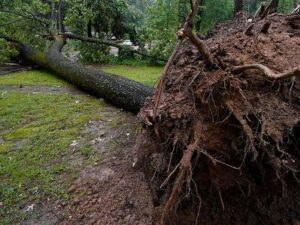
As the soil becomes softer, it also loses some of its ability to firmly support the roots. This means a tree that was stable before a storm may become vulnerable to leaning or uprooting when high winds arrive.
Trees growing in clay soils, common throughout the Raleigh area, may be especially susceptible because these soils tend to hold water longer than sandy soils.
Which Trees Are Most at Risk?
Some trees are naturally more vulnerable to storm damage than others, particularly when the ground becomes saturated.
Common trees that may be at greater risk include:
- Pine trees
- Water oaks
- Willow oaks
- Bradford pears
- Trees with existing decay or hollow trunks
- Trees growing in poorly drained areas
- Trees with shallow or damaged root systems
This doesn’t mean these trees always need to be removed. Many remain healthy and stable for decades. However, heavy rain can expose existing weaknesses that weren’t previously visible.
Warning Signs of Root Damage After Heavy Rain
After a significant rain event, it’s a good idea to walk your property and inspect your trees.
Some warning signs include:
- A tree that suddenly begins leaning
- Soil lifting or cracking around the base of the trunk
- Exposed roots
- New gaps between the trunk and the surrounding soil
- Large dead or hanging limbs
- Cracks developing in the trunk
- Mushrooms or signs of decay around the root flare
If you notice any of these issues, it’s worth having the tree evaluated by a professional before the next storm arrives.
Does a Tree Need to Be Removed After Heavy Rain?
Not necessarily.
One of the biggest misconceptions homeowners have is that every leaning or stressed tree needs to come down. In many cases, a healthy tree can recover if the root system hasn’t suffered significant damage.
However, tree removal may be the safest option when:
- The tree has developed a noticeable lean after the storm.
- The root plate has begun lifting out of the ground.
- Large structural roots have failed.
- The tree is threatening your home, driveway, vehicles, or power lines.
- The tree has extensive decay combined with storm-related damage.
- A professional inspection determines the tree is no longer structurally sound.
Every tree is different, which is why it’s important to have an experienced tree professional evaluate the situation before making a decision.
Don’t Wait Until the Next Storm
A tree that’s weakened by heavy rain may remain standing for days or even weeks before failing. Another round of rain, strong winds, or saturated soil can quickly turn a damaged tree into an emergency.
Scheduling an inspection after heavy rainfall can help identify potential hazards before they become dangerous. Proactively removing a hazardous tree is often safer, less expensive, and less stressful than dealing with emergency storm damage later.
Professional Tree Evaluations Provide Peace of Mind
At North Raleigh Tree, our experienced team knows what to look for after severe weather. We evaluate the entire tree—not just what you can see above ground.
During an inspection, we assess:
- Root stability
- Soil conditions
- Tree lean
- Structural defects
- Trunk damage
- Canopy health
- Overall risk to nearby structures and people
If the tree is healthy and stable, we’ll tell you. If pruning or ongoing monitoring is a better solution than removal, we’ll explain your options. And if the tree poses a safety risk, we’ll recommend the safest approach to protect your property.
Trust North Raleigh Tree for Expert Tree Removal
If heavy rain has left you concerned about the safety of your trees, North Raleigh Tree is here to help. We provide professional tree inspections, hazardous tree assessments, crane-assisted tree removal, emergency tree services, and storm damage cleanup throughout Raleigh, Wake Forest, Rolesville, Knightdale, Cary, Apex, Holly Springs, Garner, and surrounding communities.
Whether you need peace of mind or immediate tree removal, our experienced team has the equipment and expertise to handle the job safely and efficiently.
Contact North Raleigh Tree Today
Heavy rain can weaken tree roots long before a tree falls. If you’ve noticed a leaning tree, exposed roots, or other signs of storm damage, don’t wait for the next round of severe weather.
Contact North Raleigh Tree today to schedule a professional tree inspection. We’ll help determine whether your tree can be safely preserved or if removal is the best option to protect your home, family, and property.